Seven planets visible to the naked eye, Uranus, Neptune, Pluto, Chiron, and even the Black Moon and the Lunar Nodes… Astrology already seems complex enough without adding these small celestial bodies, which number in the hundreds of thousands! So let’s take a closer look at when it actually makes sense to include them in our analyses.
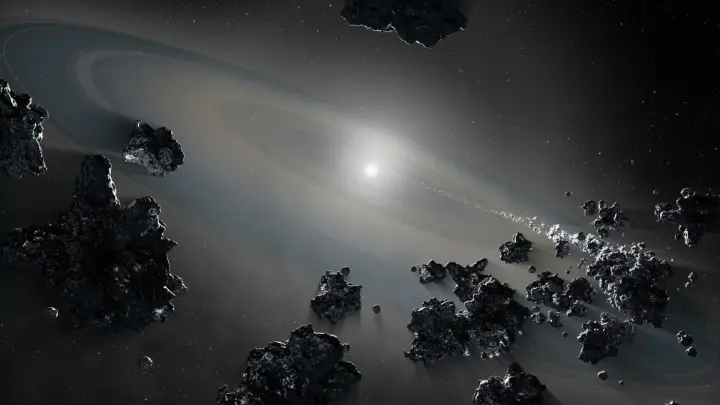
It’s often said, “Given everything that already has to be considered in a natal chart, it makes little sense to add thousands of asteroids that have barely been studied” — and that isn’t entirely wrong.
Asteroids are not meant to be used as a first approach to a natal chart or to transit analysis. Earlier astrologers were already producing remarkably accurate interpretations using only the seven traditional planets, and later on, profound insights emerged with the addition of Uranus, Neptune, and Pluto. More recently, since the work of Melanie Reinhart, many of us can no longer imagine practicing astrology without Chiron. Each level of analysis has its own wisdom, and each evolution of astrology has its meaning.
I am convinced that we are entering an era in which asteroids will take on increasing importance—while still remaining in their proper place: they are not meant to carry the same weight as the main factors in a chart. That said, they can answer very specific questions with remarkable accuracy and astonishing precision.
I have therefore spent many years studying Psyche (16) and have written a book to present the results of my research. However, I only place it in a natal chart—or study its transits—when a consultation revolves around romantic difficulties (or issues in friendship). That said, the experiences of many public figures—for example the breakup between Lennon and McCartney, the difficulties Simone de Beauvoir experienced with Sartre, or those Robert F. Kennedy Sr. went through with Jackie Kennedy—are illuminated in a striking and entirely new way when the asteroid Psyche is added to their charts, as it was activated (within less than one degree of orb) at the time of their relational crises.

I also study other asteroids, and some of them can be truly decisive in understanding why two charts with a similar underlying dynamic may lead to very different life paths (of course, upbringing and social environment also play a crucial role). Recently, it has been highlighted that Brigitte Bardot had the asteroid Diana conjunct her South Node. Diana—Artemis in Greek mythology—was a protector of wild animal life and of nature more broadly.
Urania (30), the goddess of astronomy and astrology, is in exact opposition to Uranus in Kepler’s chart, and in exact square to his Mars; this asteroid is within a one-degree orb of a square to the Black Moon in Du Châtelet’s chart, and in exact quincunx to the Black Moon in Maupertuis’s chart; it is in exact sextile to Newton’s Ascendant. Once these facts are established, one can then slightly widen the orb and no longer be surprised to find it three degrees from Elon Musk’s Midheaven, given his passion for space exploration from a very young age.
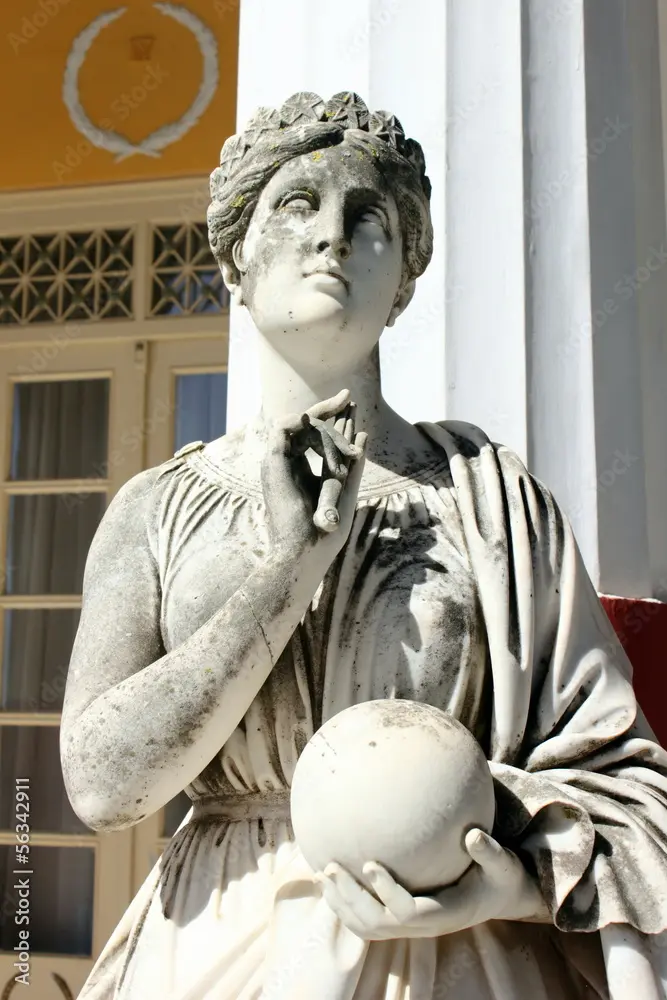 Urania Urani Urania
It is also deeply unsettling to place crime-related asteroids in the charts of serial killers or sexual offenders. Martha Lang Wescott has specialized in this kind of work (as well as in health-related asteroids—both very sensitive areas), and the results she obtained, which I have tested on some of the most notoriously infamous French criminals, are striking.
To work conscientiously with asteroids, one must allow for very tight orbs: no more than one degree to establish initial results, widening them only later—especially if the asteroid is angular, in aspect to the Sun or the Moon, or involved in a conjunction. At the beginning, it is essential to restrict oneself to this one-degree orb; otherwise, statistical probabilities make it possible to find an asteroid aspect that “proves” almost anything one is looking to prove. The zodiac spans only 360 degrees, and if one allows even a five-degree orb (that is, ten degrees on either side), and works with conjunctions, squares, oppositions, trines, sextiles, and quincunxes, this already amounts to about 100 degrees of the zodiac forming an aspect to a given planet—roughly a one-in-four chance of “finding” something. And if one studies even just four asteroids at the same time, one may end up drawing connections that are nothing more than coincidences.
However, when a strict protocol is followed and a large number of charts are studied, one can only find the study of asteroids fascinating—and eventually find it impossible to do without their insight when addressing specific questions. I recall, for example, the chart of a young girl who had developed cognitive difficulties for which no definitive diagnosis had been established. Of course, the chart itself could not indicate these difficulties, and without this prior information, asteroids would have been of no use. But since I already had some idea of what I was looking for, I examined Ceres: in her chart, it was in exact square to Neptune in Aquarius. Upon further inquiry, it turned out that the mother had resumed drinking alcohol throughout the entire period during which she was breastfeeding the child.
In conclusion, asteroids can offer both the best and the worst. On the one hand, there are books or lectures devoted to asteroids that have not truly been studied, yet whose meaning is assumed in advance based solely on their names. This inevitably leads to obvious pitfalls, vague interpretations, and explanations that are difficult to understand and ultimately of little practical use to the astrologer. On the other hand, when approached with rigor, asteroids can provide uniquely insightful perspectives on natal charts or on life events—whether through their transits, or, even more effectively, through their activation by progressed planets—provided one is willing to devote sufficient time to studying them seriously and methodically.